Start with identity and scope
Confirm that the entry list, result and public profile refer to the same person. Display names, team names and account identifiers do not always match. Prefer the organiser’s entry information and a driver’s own public channels when establishing identity. Do not infer age, nationality, employment or personal circumstances from a screen name or a broadcast flag alone.
Then define the competitive scope. A strong record in one car, simulator or race format is evidence of success in that context. It is not an automatic ranking across every virtual discipline. A profile should tell the reader whether it describes sprint racing, endurance teamwork, single-seaters, touring cars or another clearly bounded environment.
Compare pace on fair terms
Fastest laps are attractive headline material because they are easy to quote. They are also easy to misuse. Fuel load, tyre condition, traffic, weather settings and the stage of a stint all affect the comparison. A lap from an empty qualifying track does not answer the same question as a lap set while managing traffic late in a race.
Where reliable timing is available, look for repeated pace in comparable conditions rather than selecting one impressive number. Explain exclusions such as pit laps or caution periods. If the data cannot support that separation, say so. A restrained observation about visible pace is more useful than a precise-looking average built from incompatible laps.
Describe consistency without inventing character
Repeatedly completing clean stints can be a competitive strength. So can avoiding unnecessary losses when outright pace is limited. But consistency should describe observed performance, not become a shortcut to a personality claim. Several finishes do not prove that someone is naturally cautious, and one collision does not establish a reckless character.
Incident totals also require context. Different platforms count contacts, off-track moments and other events differently. An automated incident counter is not necessarily a steward’s finding of fault. Separate a recorded event from an official responsibility decision, and avoid turning either into a personal accusation unsupported by the relevant record.
Account for the team assignment
In team racing, the visible driver may be carrying out a shared plan. Opening a race in dense traffic, managing an awkward weather transition and bringing the car home are different assignments. Comparing teammates only by their fastest lap can obscure those responsibilities. Ask which stint each driver completed and what the car needed at that point.
Preparation also extends beyond the person currently driving. Setup work, strategy, communication and spotting can contribute to the outcome. Attribute those contributions when the team or organiser has documented them. Do not assign credit to a named engineer, coach or strategist merely because that person appears on a general team roster.
Put equipment in its proper place
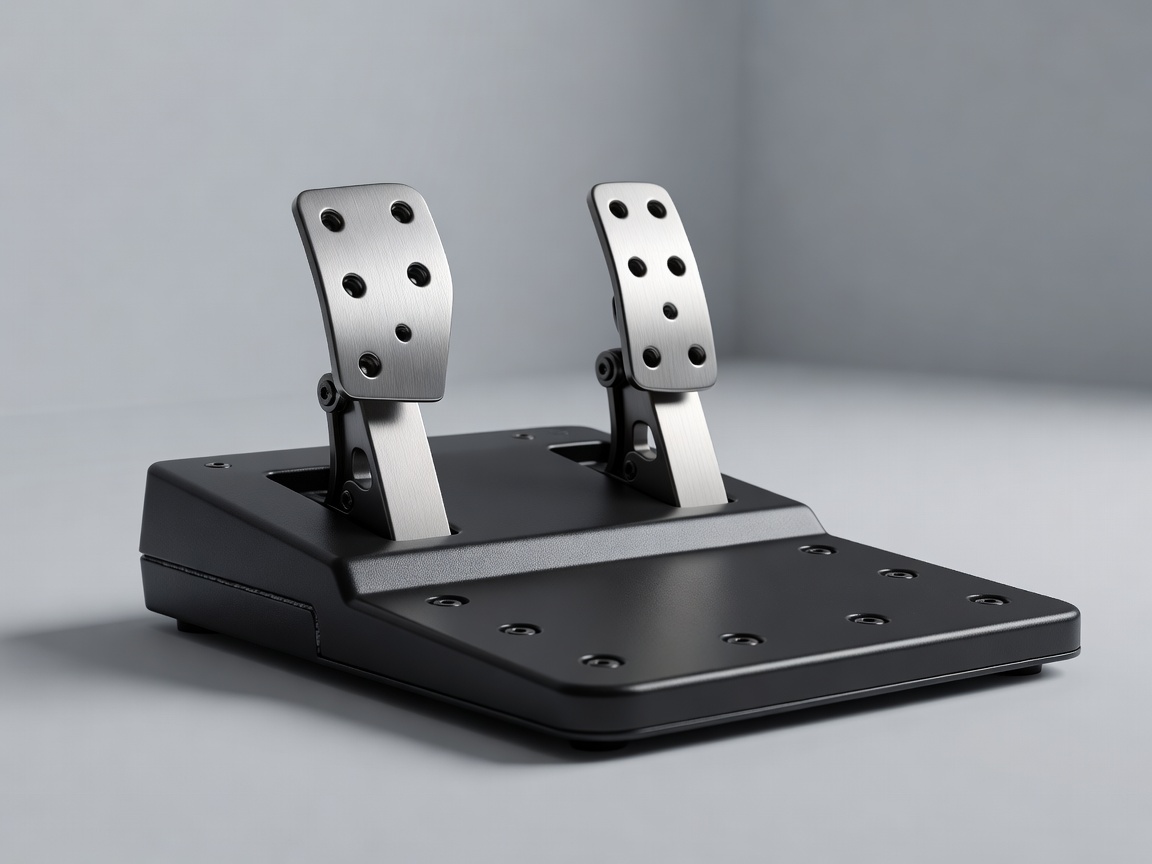
A wheel, pedal set and display arrangement shape how a driver receives feedback and makes inputs. Brake calibration can affect repeatability; field of view can influence spatial judgement. These are useful technical considerations, but a hardware list is not a reliable performance ranking. Familiarity, calibration and practice matter alongside the equipment itself.
Report hardware details only when they are relevant and attributable. Do not assume every competitor uses the same setup as a sponsor’s promotional image. Likewise, a connection failure is an observed interruption, not proof of a particular technical cause. Unless a reliable account establishes what happened, distinguish the consequence from the explanation.
Write a profile that can be checked
Build the profile around a small number of supported propositions. State the relevant competition, explain the evidence and identify the limits. If a driver says a strategy was deliberate, attribute that explanation to the driver rather than presenting private intention as something visible in the timing data.
Avoid reproducing rumours, private contact details or unsupported allegations. A public racing identity does not remove a person’s interest in fair treatment. If a result changes after a ruling, update the description and the conclusion it supported. Good driver coverage remains open to correction because the official record, and the context around it, can develop.
The strongest final paragraph does not promise that a driver will win next time. It explains what to watch: sustained stint pace, adaptation to another car, cleaner opening laps or a different team role. That gives the reader a useful test instead of a reputation repeated as fact.